
Patient Education Video Production
Procedure prep, condition explainers, medication guides and informed-consent support for hospitals, health systems and clinics.
Hackensack Meridian Health — kidney cancer series
Trusted by leading healthcare organizations
:quality(75))
:quality(75))
:quality(75))
:quality(75))
:quality(75))
:quality(75))
:quality(75))
:quality(75))
:quality(75))
:quality(75))
We work with your clinical reviewer on the script before production starts, and captions, plain-language wording and translation can be built in from the outset. As a Healthcare Video Production company — spanning patient-facing education and, for pharma and biotech audiences, Pharmaceutical & Biotech Animation — we have made this work for Hackensack Meridian Health and the Board of Pensions, where it sits inside everyday patient care.
What patient education videos do you produce?
This work covers a lot of ground, from preparing someone for surgery to explaining what a new diagnosis means for daily life. Most healthcare organizations use video for one of six jobs, though a single series usually covers more than one — a procedure walkthrough that also has to answer the aftercare questions. These are the video types that get asked for most.
Procedure and surgery preparation
What happens, what to bring, what to stop taking, and what recovery looks like.
Condition explainers
A diagnosis in plain language, without the medical jargon a patient cannot act on. Most medical conditions need one clear film, not a library.
Medication and treatment guides
How a treatment works, how to take it, and which side effects matter.
Discharge and aftercare
The instructions patients forget on the drive home. Clear guidance here is one of the simplest ways to improve patient outcomes.
Informed-consent support
A risks, benefits and alternatives walk-through a clinician can play before patient consent is signed.
What is covered, who it is for, and when to book it — informational videos that educate patients before a problem starts.
Healthcare explainer videos for patients
A healthcare explainer is the format: a short animated or presenter-led piece explaining one concept, usually under three minutes. That is the job it most often does here — turning a diagnosis, a procedure or a medication into something a patient can act on the same day they hear it. For a patient-facing app, see the Pixel Fertility welcome and how-to videos, which walk fertility patients through their treatment platform.
The same video content can be cut for a portal, a waiting-room screen, a bedside tablet or YouTube, so educational videos reach patients on the online platforms they already use. For work outside healthcare, see Explainer Video Production.
Who these healthcare videos are for
Hospitals and health systems, pharma patient-support teams, medical device companies, and mental-health organizations — any healthcare provider that has to educate patients about conditions, treatments or procedures. Patient engagement is usually the real goal: a patient who understands the plan is more likely to follow it.
Related clinical work includes medical training and education videos for staff, and healthcare marketing video production for patient acquisition and awareness.
- Hospitals and health systems across the healthcare sector
- Pharma patient-support and medical education teams
- Medical device companies briefing patients and clinicians
- Clinics running preventive care and screening programs

Kidney cancer series for Hackensack Meridian
Hackensack Meridian Health — a six-video series for New Jersey’s largest healthcare network, covering cancer interception, robot-assisted surgery, the care team, advance care planning, hereditary risk and the three treatment pathways for localized kidney cancer. One character system runs across all six, so the set reads as one story rather than six unrelated medical videos.
The full series is covered in the Hackensack Meridian patient education case study. For icon- and text-led patient pieces, see our kinetic type and data graphics.

:quality(75))
:quality(75))
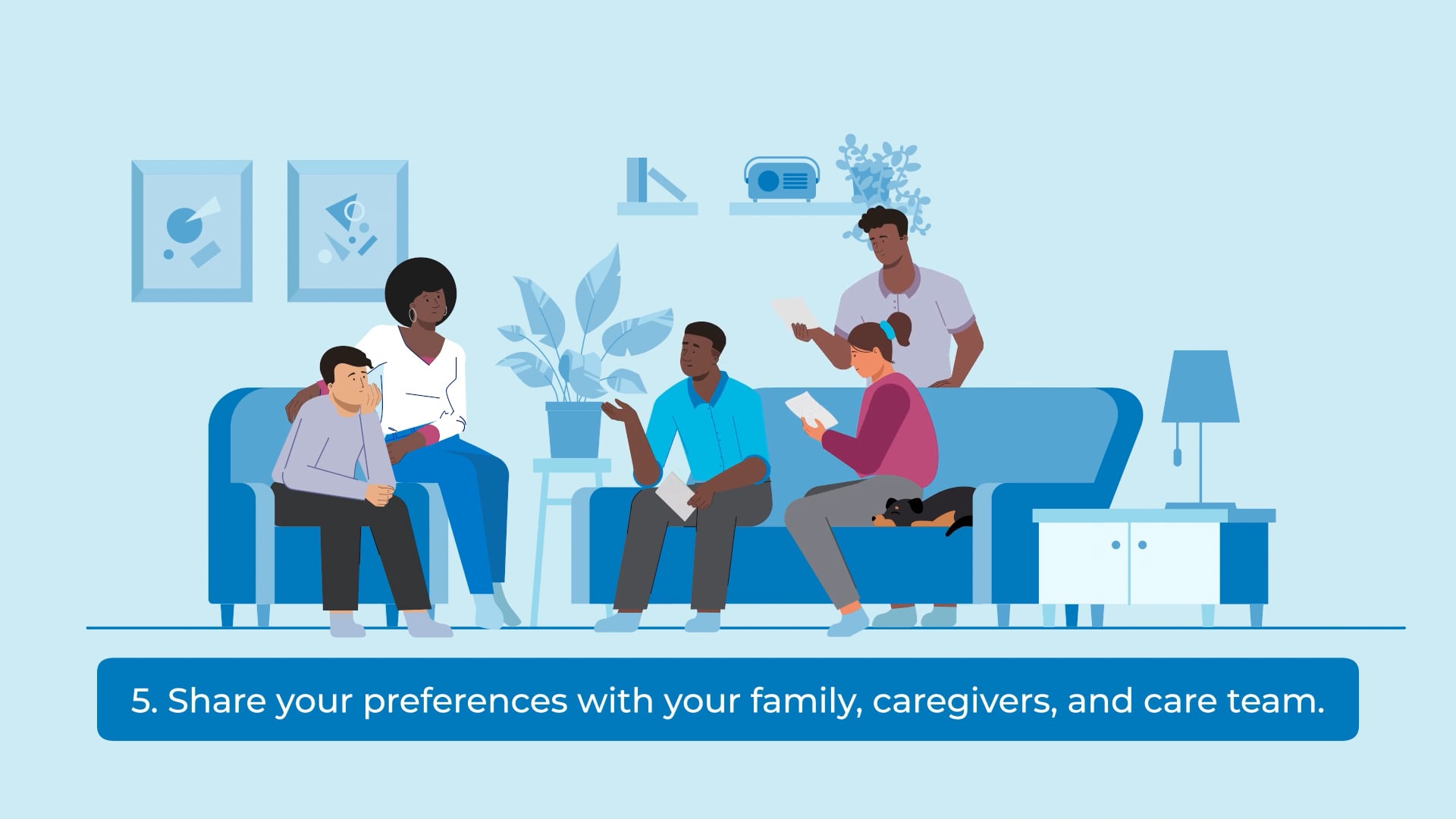
Intercepting Cancer Before It Happens
Animated or live action?
Animated video when the subject is inside the body, when patients cannot or should not appear on camera, or when the same piece has to run in several languages. Live action when a real clinician’s face is what builds trust — a surgeon explaining recovery, a nurse walking a ward. Many healthcare organizations use both.
- Animated: no one on camera, so no filming consent to manage
- Animated: re-voice a language without a reshoot
- Live action: a familiar clinician carries authority a drawing cannot
- Mixed media: a presenter on camera with animated medical visuals behind them
Updating a fact later is a re-voice and a graphic change in animated work; in live action it usually means getting the same person back on camera. Testimonial videos are the one case where live action almost always wins.
:quality(75))
Our video production process
The clinical reviewer sees the script before anything is produced, so accuracy is settled before the expensive part starts.
Preventive care series
The Board of Pensions of the Presbyterian Church — an explainer on what counts as preventive care under a member’s plan: personalized risk assessment, early detection, and what is covered before a bill appears. Benefits comprehension rather than clinical instruction, which is a different script and a different kind of patient communication than the anatomy and device work a medical animation company typically handles.
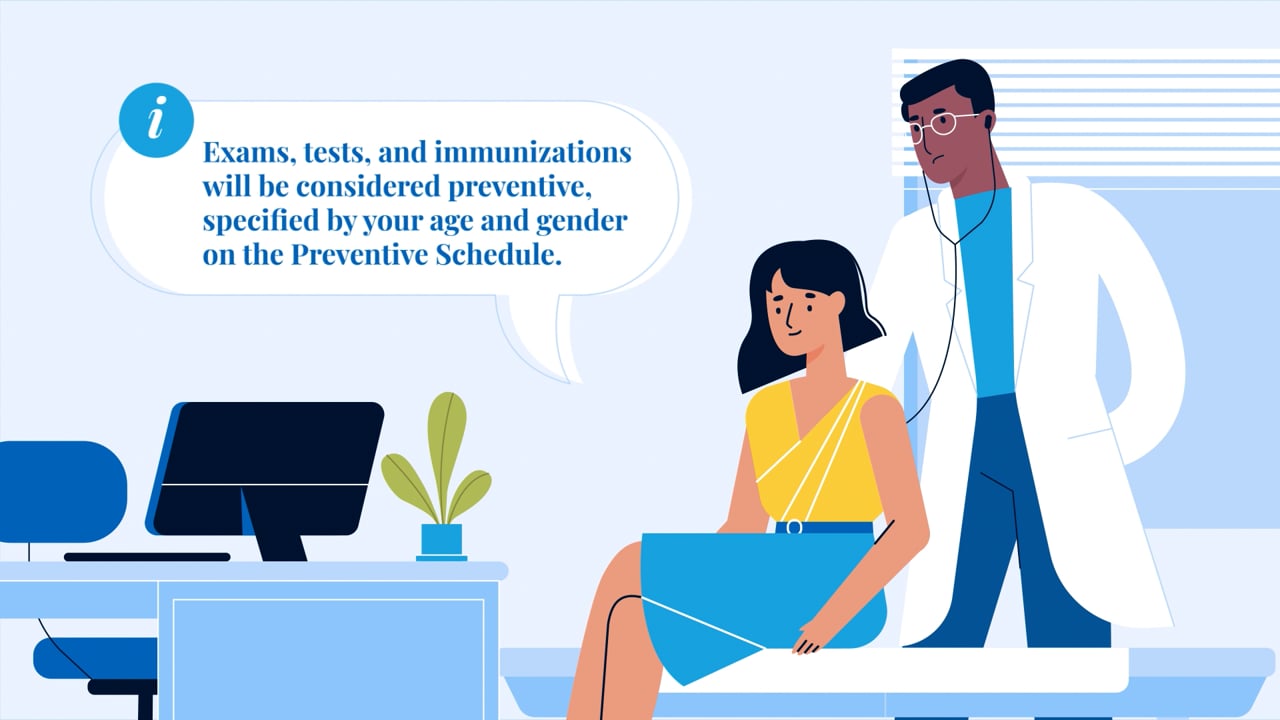
Preventative Care
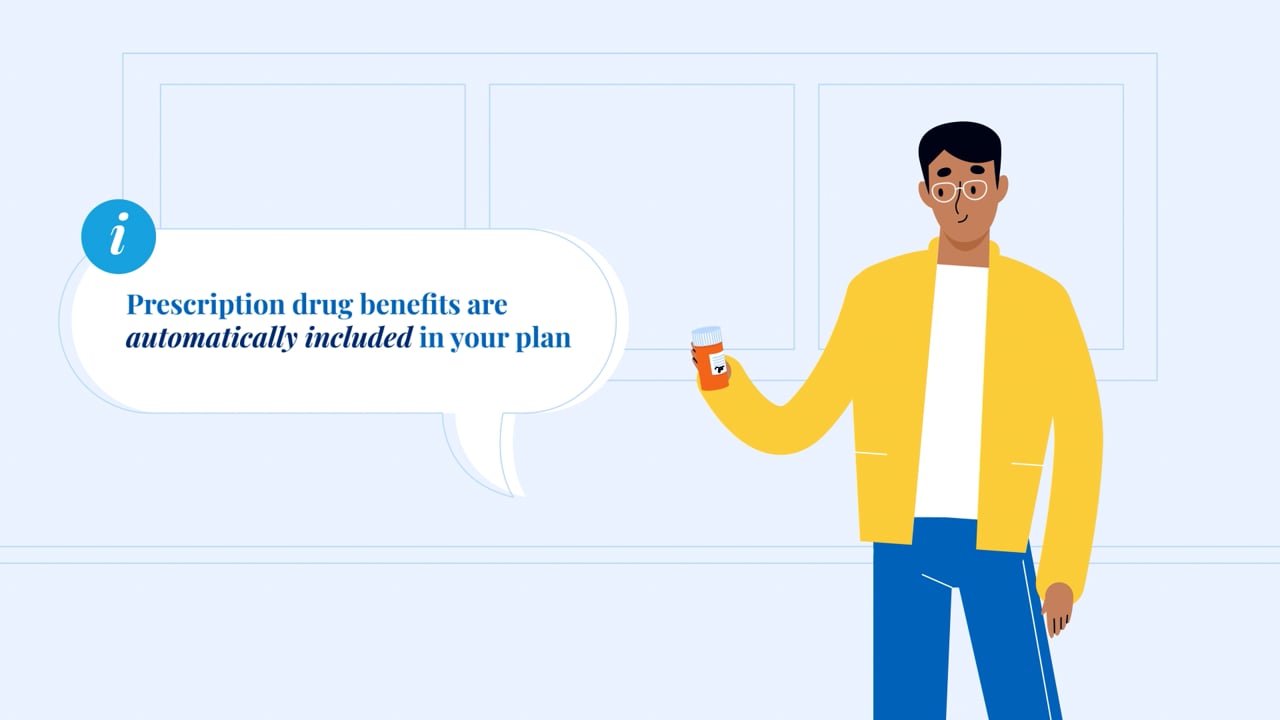
Prescription Drug Benefits
Accessible, multilingual and written in plain language
This only works if the patient understands it, so accessibility is a scripting decision before it is a delivery format. Captions, a plain-language script and translation can all be planned into a project from the start, so one piece can support patient understanding and brief healthcare professionals without a rewrite.
Writing for comprehension means shorter sentences, no medical jargon a patient has to decode, and one idea on screen at a time. Complex medical information does not become clearer by being said faster.
- Closed captions
- Plain-language script, checked for reading level
- Translation and re-voicing for the languages your patients speak
- Cuts sized for a portal, a waiting-room screen, a bedside tablet or YouTube
See it in practice: our English and Spanish clinical-trial video for ReAlta Life Sciences, produced as two full productions rather than one with subtitles.
:quality(75))
Can you film patients in a healthcare facility?
Yes, and plenty of medical videos are filmed. It needs written authorization from everyone identifiable before recording, and most facilities run their own media approval process on top of that, so video shoots take planning. Patient privacy and patient confidentiality are the reason the paperwork exists, and any medical personnel on camera go through the same process.
Animated work takes a different route. There is no one on camera, so the approvals fall away, and a procedure can be shown from inside the body where a camera cannot go. Neither is automatically better — a familiar clinician on screen carries trust that a drawing does not. Many series use both.
:quality(75))
How much does patient education video production cost?
Most of this work is priced as explainer animation, with a range of $4,500 to $15,000 per finished minute, quoted once the work is scoped. Where a project lands depends on how much is illustrated from scratch, how long it runs, how many languages it ships in, and how many review rounds it carries. However, at scale, these productions can take on the same pricing as our eLearning video productions — much more motion-graphics-based, text-based and icon-based work — which often land within $360 to $3,000 per finished minute. A series is usually cheaper per video than a one-off, because the look and the script references are set once.
Looking for staff training instead? Medical Training & Education Videos pricing runs more modest.
:quality(75))
Modest
$4,500
– $7,000 per minute
One condition or procedure, cleanly explained — flat illustration with minimal scene-building.
- Flat 2D illustration
- Clinical reviewer sign-off
- Captioned and translation-ready
:quality(75))
Moderate
$7,000
– $11,000 per minute
A multi-step care pathway or a mix of live action and animation — the most common band for a real patient series.
- Custom illustration or live presenter
- Multiple steps or scenes
- Multiple languages on request
:quality(75))
High end
$8,000
– $15,000 per minute
A full series across many conditions or procedures, or a complex inside-the-body explainer — one character system carrying the whole set.
- Full series, one character system
- Complex anatomy or procedure detail
- Assets reusable across the whole series
What our clients say
Frequently asked questions
Most of this work is priced as explainer animation, roughly $4,500 to $15,000 per finished minute, quoted as a fixed project price once scoped. Work built as training videos or for an LMS is priced on the training and eLearning model instead. The animation cost guide has the per-minute ranges.
Yes. It needs written authorization from everyone identifiable before recording, plus whatever media approvals the facility requires, and patient privacy governs the whole process. Animated work is the common alternative because no one appears on camera.
Procedure and surgery preparation, condition explainers, medication and treatment guides, discharge and aftercare, informed-consent support, and preventive care and screening. One series often covers several.
A library gives every healthcare organization the same generic clips. Custom production is built around your protocols, your care teams and your patients, so it matches how you actually deliver care.
Yes. A clear video supplements the clinician conversation and the signed consent form, helping a patient understand a procedure before they agree to it. It does not replace either.
Yes, when it is planned into the project up front. Captions, a plain-language script and translation for the languages your patients speak can all be built in from the start.
:quality(75))
Ready to scope a project?
Tell us what your patients need to understand and what already exists: a protocol, a script, brand guidelines, or nothing yet. We will scope the work and come back with a fixed price.
We’ll work with you to understand your objectives, how we can provide assistance and we’ll outline the next steps.