
Corporate Training Video Production Company
Onboarding, compliance, safety, and skills training videos that scale across your LMS. Motifmotion is a corporate training video production company that helps organizations onboard, train, and certify teams. If you are comparing training video production companies, the difference is scope: we build compliance, safety, and new-hire programs as repeatable systems, not one-off videos, so a 32-episode program costs less per episode than five stand-alone ones.
:quality(75))
Samples from our work for training teams. See full samples below.
Trusted by leaders
Motifmotion has produced training and eLearning video for these organizations since 2015.
:quality(75))
:quality(75))
:quality(75))
:quality(75))
:quality(75))
:quality(75))
:quality(75))
:quality(75))
:quality(75))
:quality(75))
What is corporate training video production?
Corporate training video production is the end-to-end creation of video designed to teach employees a procedure, policy, or skill: scripted, storyboarded, produced, and packaged for delivery inside an LMS or intranet. It sits next to eLearning video production, but unlike marketing or explainer video, it prioritizes clarity, modular structure, and long-term reuse over one-time impact.
Weighing whether AI can do this instead? See where AI actually helps in AI in video production: what actually works.
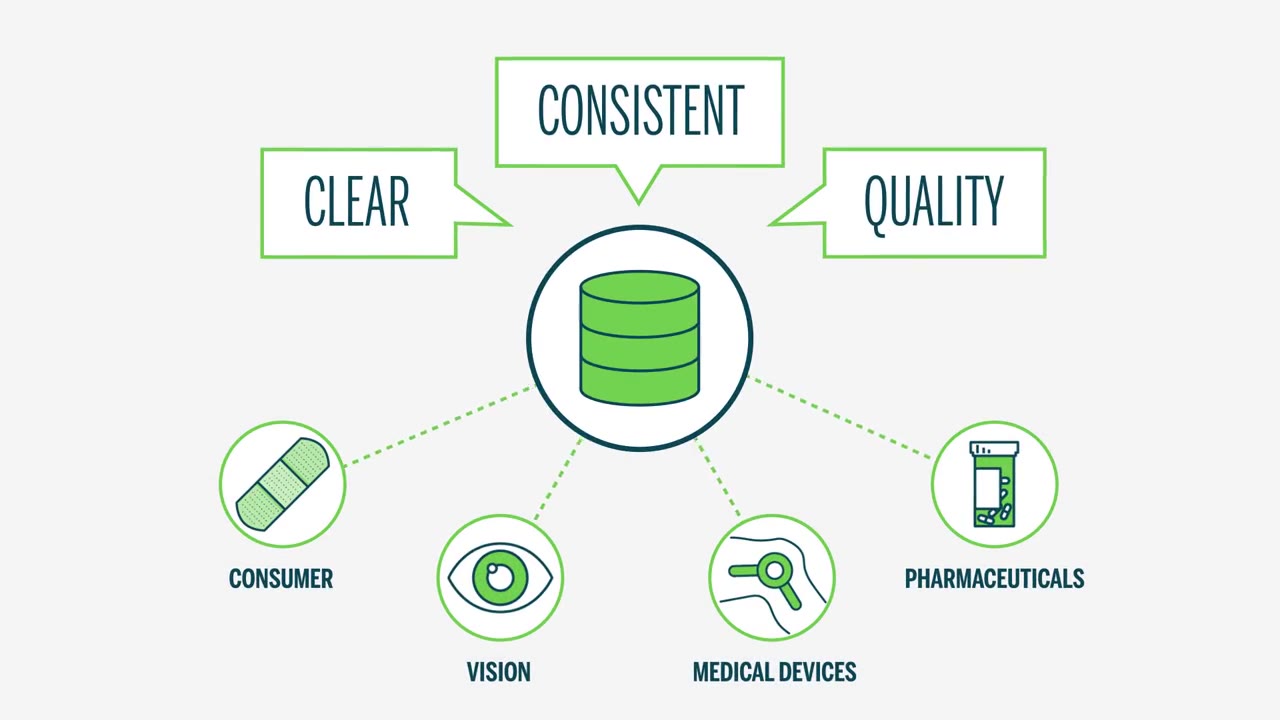
From a supply chain explainer series produced for Johnson & Johnson.
What sets Motifmotion apart
Motifmotion is built for training at scale. Each program is designed as one visual system: characters, scenes and graphics are built once as a library and reused in every module, so the fiftieth video looks like the first, and a policy change means updating a scene rather than starting over. The same refined production process runs every time. That is how HCSG's program reached 32 episodes and AccessLex's coursework passed 50 hours without losing consistency.
Instructional design first
The message is clarified and mapped to a learning objective before a single frame is drawn.
A predictable workflow
Named milestones and set revision cycles, so a 32-module program runs on schedule.
Formats chosen for the goal
Animation, a live presenter, or mixed media, chosen for the learning goal rather than a house style.
Budgets built for volume
Priced per finished minute, with characters and graphics built once and reused, so the per-minute cost doesn't grow as the program does.
Training videos we produce
Motifmotion produces training content in eight formats, built mostly in 2D animation and used across industries, including healthcare video production, medical training and education videos, educational video production, industrial video production, recruitment video production, and SaaS video production. Corporate video production for marketing sits on a different model; employee training work is built for reuse. Onboarding, compliance, and safety training each get their own section below. Security-awareness training is part of that list: see custom security awareness training videos vs. off-the-shelf libraries for when a commissioned video is worth more than a subscription library.
- Compliance & policy training
- HR training & new-hire orientation
- Software & systems tutorials
- Safety & emergency procedure training
- Sales, product & customer education
- Leadership & management development
- Operations & SOP training
- Professional development & workforce upskilling
:quality(75))
:quality(75))
“From the outset, we were blown away by their creative suggestions. Motifmotion didn’t just meet our expectations; they exceeded them with innovative ideas that breathed life into our projects.”
— Carla Siravo
Curriculum DesignerOnboarding video production
A first-week video gives every new hire the same start, regardless of location: company culture and values, day-one logistics, job-specific responsibilities, and the tools they will use immediately. Motifmotion builds these as short modules rather than one long orientation video, so HR can update a single module, a new tool or a policy change, without re-cutting the whole series.
For the format-by-format breakdown (live action, animated, or mixed media) and a full script-writing walkthrough, see the employee onboarding videos guide.
From an animation produced for the American Economic Association.
Compliance training videos
Compliance training covers the policies employees have to acknowledge and periodically re-certify: HIPAA and other data-privacy rules, workplace harassment and discrimination prevention, DEI programming, code-of-conduct and ethics training, and GDPR for teams handling EU data.
Motifmotion built the PHMC compliance training series this way: short, single-topic 2D animated modules that Pennsylvania retail employees complete between shifts, each one mapped to one legal requirement rather than a general policy overview. The series reduced training time and improved completion rates across every location. To put a first number on your own library, try the training video cost calculator.
:quality(75))
From PHMC's statewide compliance series: the rule, the law it comes from, and the on-screen text employees are tested on.
Safety training video production
Safety training, lockout/tagout, PPE, confined space entry, forklift operation, roadway and facility hazards, usually has to hold up when an auditor asks where the content came from, and buyers researching it search differently. Our safety training video production page covers the safety videos we produce, animation vs. live action, cost and timelines.
The clip here comes from a securement procedure training video for TOTE Maritime Alaska, built from the company's own securement manual. See the TOTE case study. For text, chart and icon modules, see our motion graphics animation.
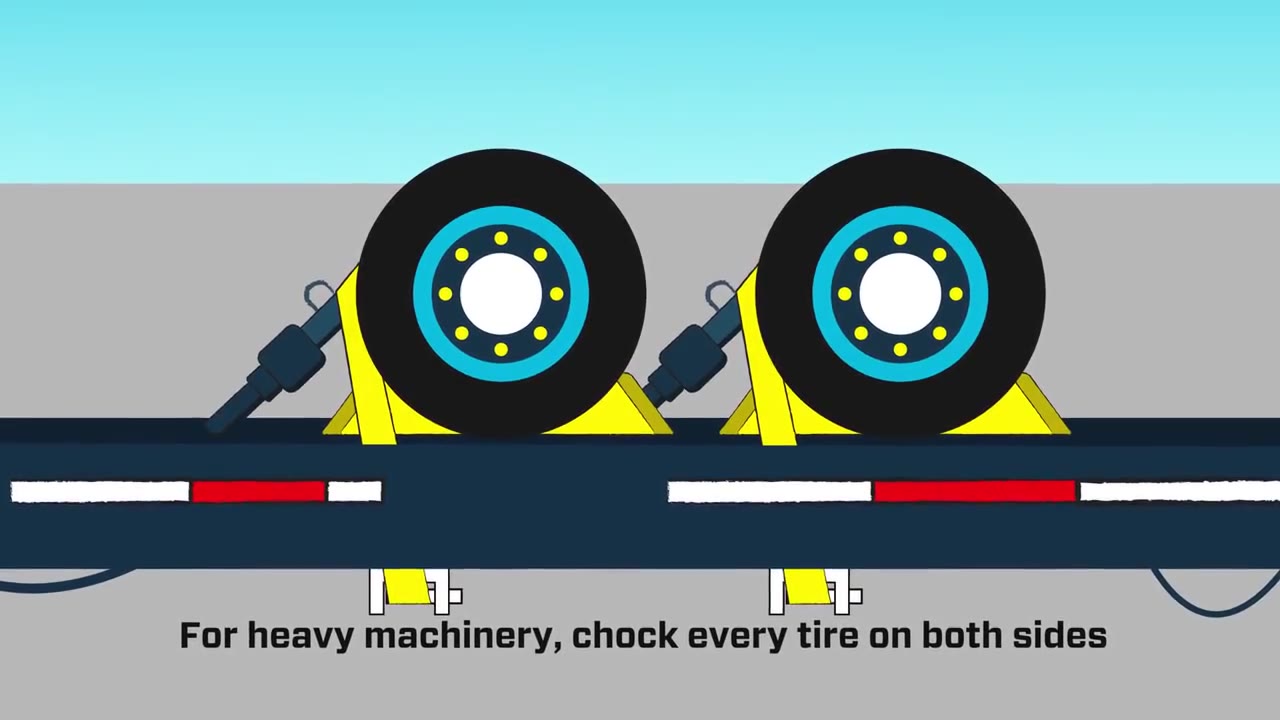
From a securement procedure training video for TOTE Maritime Alaska: chock every tire on both sides.
Animation, live action, or mixed media?
Full animation
Suits abstract concepts, multi-step workflows, and anything that needs to scale identically across an LMS. Animated modules are also the easiest to update when a procedure changes.
Live presenter with animated visuals
The presenter carries tone and presence, the animation carries precision. Suits compliance, policy, safety, and leadership training.
Mixed media
Animation, images, and live video together. Suits storytelling, demonstrations, and nuanced topics that need both. Animation still carries the structure.
The decision comes from the learning objective, not a house style. HCSG's 32-episode program used dialogue-driven animation because the training was about how a conversation should sound, not what a policy says. PHMC's compliance series used full animation because the subject was a set of rules that had to look identical across every location. For customers rather than staff, see the PECO customer education series. For a public-media example, see the PBS-WHYY educational animation series.
Training video case studies
:quality(75)) Full animated visuals
Full animated visualsFull animation simplified complex workflows for a statewide compliance rollout.
:quality(75)) With live presenter
With live presenterLegal education series
AccessLexPresenter-led teaching paired with animation across 50+ hours of bar-prep coursework.
:quality(75)) Safety & compliance
Safety & complianceRoadway safety series
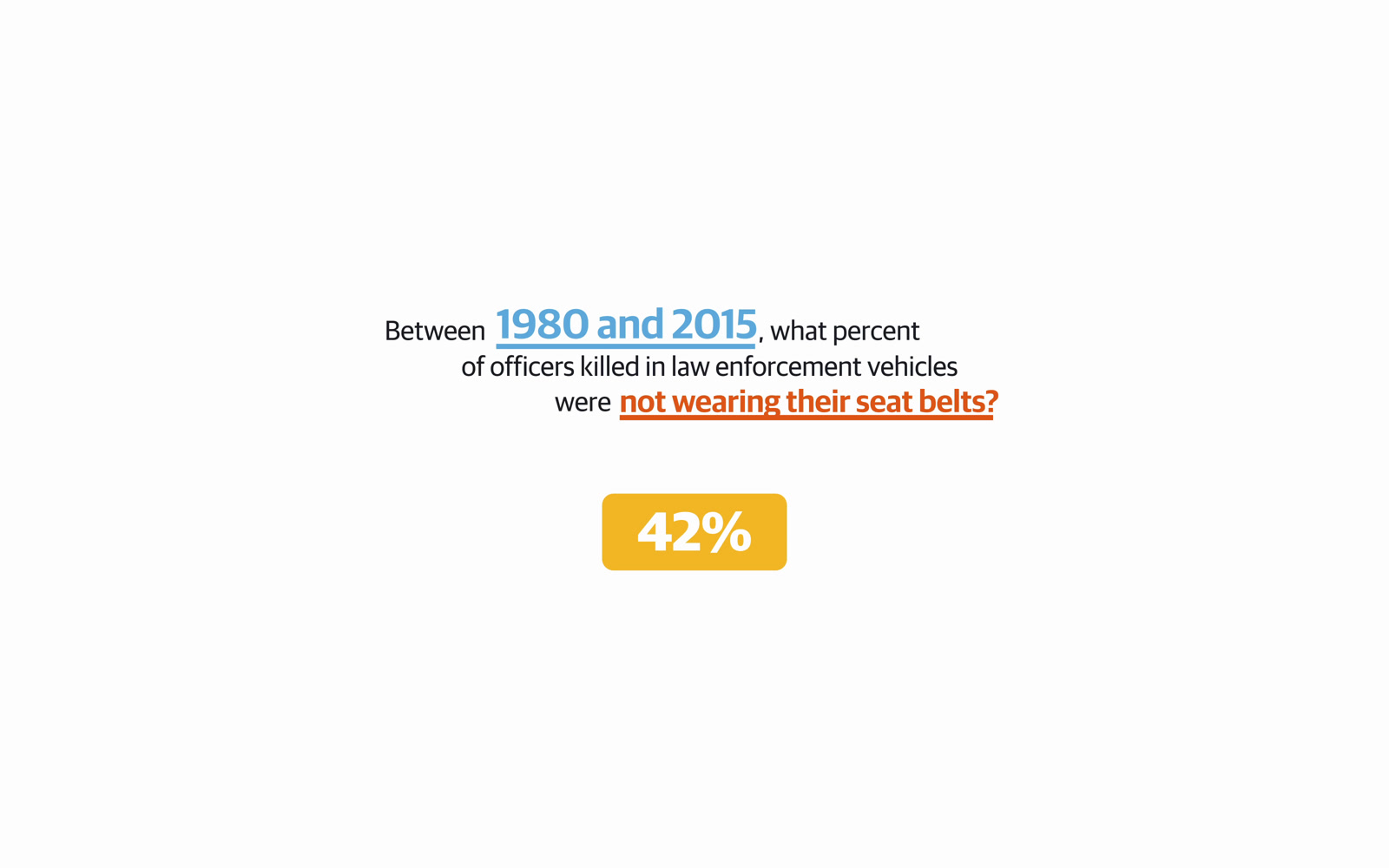
Institute for Intergovernmental ResearchEight animated episodes, each built on one cited statistic.
:quality(75)) Training at scale
Training at scaleEmployee training series
Healthcare Service GroupA 32-episode dialogue-driven program built on one three-step service model, covering frontline and home-office roles.
:quality(75)) Safety training
Safety trainingSecurement procedure training
TOTE Maritime AlaskaA securement procedure training video built from the company's own manual: three load types, every rule on screen.
 Instructional video
One instructional video that walks Pennsylvania parents through applying for the Child Care Works subsidy, step by step.
Ready to start your training project?
Whether you need five modules or fifty, we’re happy to brainstorm. Reach out!
Our training video production process
Topic and objective discovery, scripting, storyboarding, design, illustration, animation, sound design, then delivery and LMS integration. The production process adapts to what you already have: tell us if you already have scripts, an existing style, or do not need sound design, and we skip the steps you do not. HCSG's 32-episode program ran on a single service model that carried through every episode, the reason a series at that scale stayed coherent instead of fragmenting into 32 unrelated videos. Motion graphics, illustration, and animation are all built in the same visual system. On series at this scale we also use AI in our production process for script drafting, storyboard options and asset prep, with animators and reviewers unchanged.
Our production process adapts to your needs
LMS and SCORM delivery
Every module ships as SCORM 1.2, SCORM 2004, or xAPI, so completion, scoring, and analytics flow into your existing LMS without extra manual work. When training content calls for active recall, we add chapter menus, knowledge checks, and clickable walkthroughs. You do not need to know which format your LMS uses: we confirm it during scoping and package accordingly. For a recruitment-side series, see the 18-episode Judge Group series.
Pricing
What does a training video production company cost?
Corporate training runs $360 to $3,000 per finished minute, in three tiers: $360–$800 per minute for text motion and light visuals, $800–$1,500 for icons, diagrams, and structured visuals, and $1,500–$3,000 for custom scenes or light character animation. Most programs blend all three: content-heavy modules use the lower tiers, and premium animation goes where visual richness genuinely changes comprehension.
Example ranges for a 45-minute employee training program
longform modest
$360
–$800 per minute
Text motion + light visuals
Ideal for:
- Content heavy information
- Larger scale projects
- Internal communication
- Single use communication
:quality(75))
longform moderate
$800
–$1,500 per minute
Icons, diagrams, structured visuals
Ideal for:
- Larger miniseries productions
- Consumer, patient or client facing
- Evergreen internal communication
- Visually enhanced content
:quality(75))
longform premium
$1,500
–$3,000 per minute
Custom scenes or light character animation
Ideal for:
- Flagship content
- Projects with a mass audience
- Nuanced messaging
- Dynamic narratives and scenarios
Example blended training course (45 minutes)
Final cost per minute may vary depending on pacing, text density, scene complexity, and production conditions.
To learn more about how Motifmotion builds its pricing, see our guide, How much does animation cost in 2026?
How long does corporate training video production take?
A single 2 to 5 minute video takes about six to eight weeks from kickoff to delivery, depending on its complexity and how it's planned; a training program runs from about six weeks to several months, depending on the number of modules and review rounds, and is planned in production waves rather than one block. Script revisions and the number of stakeholder review rounds move the timeline more than length does.
For live-action pieces, the usual delay is not the crew or the script but getting an executive or subject-matter expert on camera; one studio's behind-the-scenes account needed a separate shoot day nearly a month after the main shoot for a single CEO cameo. Animation avoids that dependency, which is one reason programs at HCSG's 32-episode scale are planned in waves.
:quality(75))
Training video FAQs
Most run $360 to $3,000 per finished minute depending on visual complexity. A blended 45-minute program averages about $823 per minute, roughly $37,000 total. Length, review rounds, and animation vs. live action move the number. The animation cost guide has the full per-minute breakdown.
Start with the objective, not the format. Bring a studio your learning goal, timeline, and any existing scripts; a scoping call and a written quote are the fastest way in. No production experience is needed on your side.
At these rates, a 3-minute piece runs roughly $1,080 to $9,000 depending on the visual tier; most land around $2,400 to $4,500 for a typical mixed-tier project.
Match the format to the objective: animation for abstract or multi-step processes, a live presenter for soft-skills and leadership topics, mixed media when a program needs both. The learning goal decides the format, not preference.
Look for a repeatable process (script, storyboard, design, animation, sound, LMS delivery), named review gates, and training-specific case studies. Long-form instructional work is a different skill from a 60-second explainer.
Plan for about six to eight weeks for a short single video and from six weeks to several months for a multi-module series; review cycles are the biggest swing factor. See the timeline section above for ranges by program size.
AI speeds up scripting, storyboarding, and large-scale voiceover, but it cannot yet hold a consistent visual system across scenes, so the animation itself is still built by hand. Full breakdown: AI in Video Production: What Actually Works.
Many training-focused vendors are strong on instructional design but not production; many animation studios and producers are strong on visuals but built for one-off marketing work. Motifmotion runs both craft and repeatable systems, at scale.
Every module ships as SCORM 1.2, SCORM 2004, or xAPI, so completion, scoring, and analytics flow into your existing platform. Chapter menus and knowledge checks can be added when the program calls for active recall.
:quality(75))
Ready to build a better training program?
Let’s build modules and training systems that deliver clarity, consistency, and scale.
We’ll work with you to understand your objectives and how we can provide assistance, and we’ll outline the next steps.