
Patient Education Video Case Study
One video in this set explains how molecular screening can catch cancer before it develops. Another explains how to name a healthcare representative who can make decisions on your behalf. Motifmotion produced six patient education videos for Hackensack Meridian Health spanning that entire distance.
Most patient education work covers one procedure or one condition. This covers a patient's whole arc, from hereditary risk before any diagnosis through to advance care planning after a serious one.
That range is the difficulty. The tone that works for a prevention video is wrong for an end-of-life conversation, and the set still has to look and feel like one program.
:quality(75))
Trusted by leading organizations
:quality(75))
:quality(75))
:quality(75))
:quality(75))
:quality(75))
:quality(75))
:quality(75))
:quality(75))
:quality(75))
:quality(75))
Hackensack Meridian Health – Kidney cancer and cancer interception
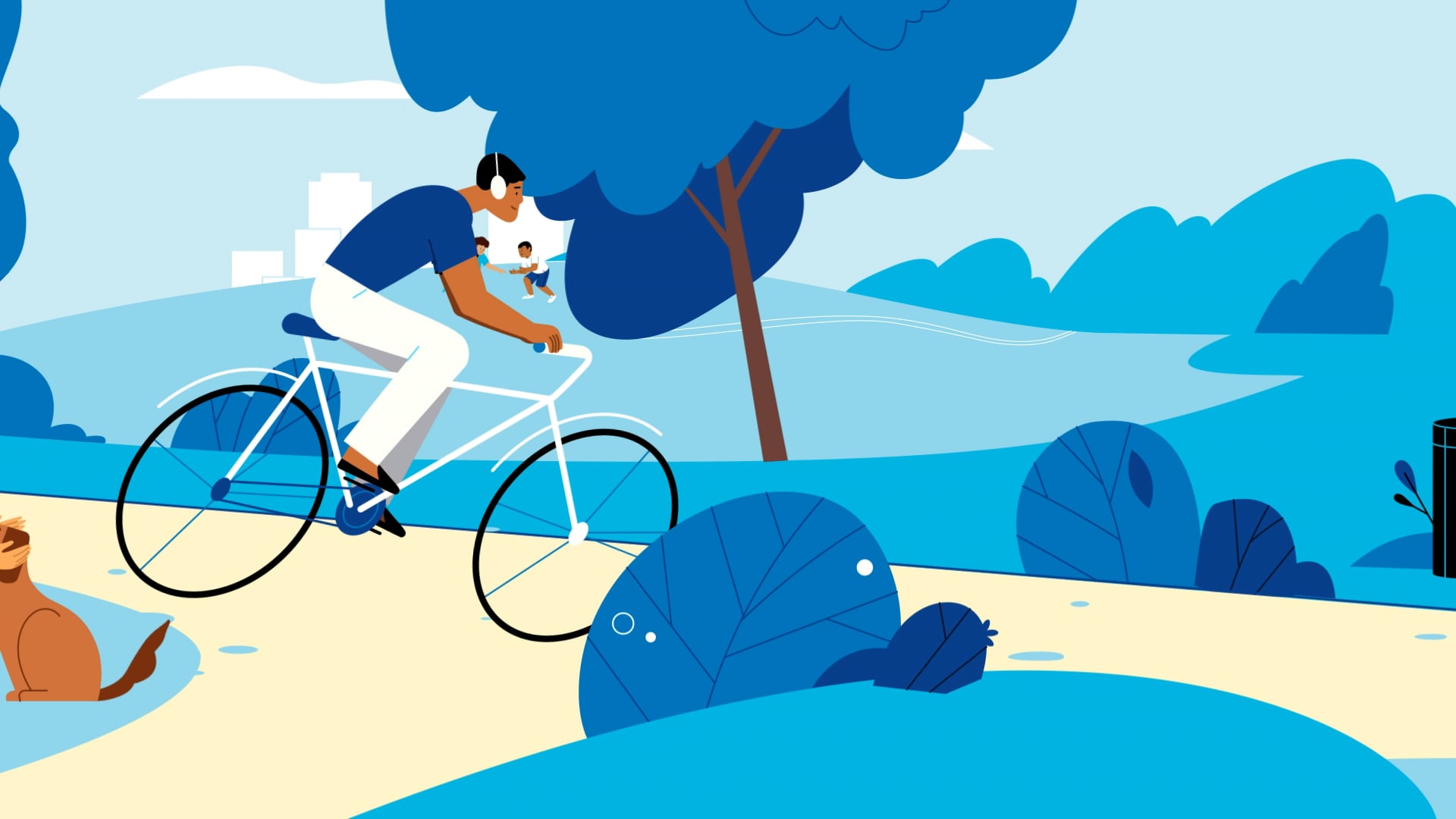
We produced six patient education videos for Hackensack Meridian Health, New Jersey's largest healthcare network. A four-part 2024 series covers cancer interception, robot-assisted surgery, the multidisciplinary care team, and advance care planning. Two further 2025 pieces cover hereditary cancer risk and the three treatment pathways for localized kidney cancer.
Taken together they follow one patient journey rather than one procedure, which is unusual for work of this kind and is the reason the set holds up as a program.
:quality(75))
:quality(75))
Intercepting Cancer Before It Happens
One pathway, not one procedure
The six pieces run in sequence rather than sitting side by side. Hereditary cancer opens the arc by naming the signal a family should notice, multiple relatives diagnosed, which points to an inherited risk worth testing for.
Interception follows, with the pathway shown as concrete touchpoints: a personal and family-history questionnaire, a nurse navigator, and the option to meet a genetic counselor. Diagnosis then sets out the three treatment paths for localized kidney cancer, surgery, ablation, and active surveillance, before the surgery video walks through what robot-assisted removal actually involves.
Care team and advance care planning close it. A patient can enter at any point and still land somewhere that makes sense.
Producing patient education video as a pathway rather than a set of one-offs is what lets a health system add the next piece without starting over.
- Hereditary cancer risk and genetic testing
- Cancer interception through risk assessment and molecular screening
- Localized kidney cancer: surgery, ablation, active surveillance
- Robot-assisted surgery, pre-op through recovery
- The multidisciplinary care team, role by role
- Advance care planning after a serious diagnosis
Have a patient journey to explain?
Service-line education, treatment pathways, pre-op and recovery. Tell us what your patients need to understand and we'll come back with ideas.
Shifting tone without breaking the series
Register changes across the arc. The interception and hereditary pieces are forward-looking and practical, built around a questionnaire and a plan. The surgery video is procedural, because a patient facing an operation wants to know what will happen to them and in what order.
The care team video is the most information-dense of the six. It names uroradiologists, uropathologists, urologic oncologists, medical and radiation oncologists, interventional radiologists, oncology nurses and physician assistants, and it has to make that legible without turning into an org chart.
What holds it together is the visual system rather than the tone. Same character design, same color language, same pacing, so a patient who watched the prevention video recognizes the care team video as part of the same thing. For icon- and type-led health pieces, see our kinetic type and data graphics.
- Forward-looking and practical for prevention and risk
- Procedural and sequenced for surgery
- Role by role, without becoming an org chart, for the care team
- One character and color system across all six
The advance care planning video
This was the hardest piece in the set and it was treated as its own problem rather than as the last episode.
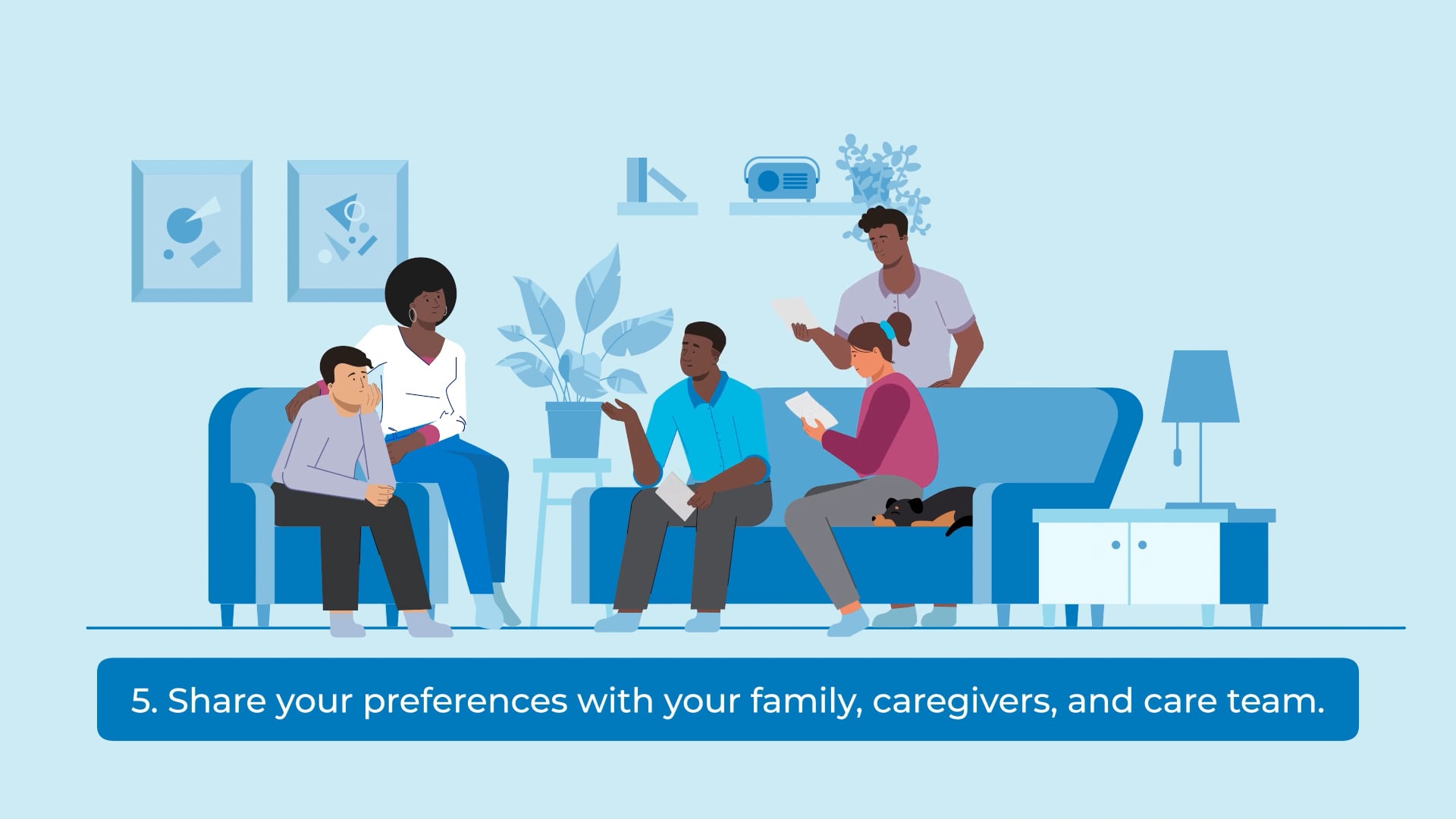
The approach was to frame advance care planning as practical work rather than as a subject to brace for. The video defines the process as four things a person does: reflect on what matters to them, learn what the treatment options are, identify a support team, and name a healthcare representative who can decide on their behalf if they cannot.
From there it stays concrete. Talk with a clinician or a palliative care specialist. Designate the representative. Put the preferences in writing. Share them with family and the care team. Nothing in the piece asks the viewer to contemplate mortality in the abstract, because that is not what the video is for. It is there to help someone finish a task that is easy to postpone.
- Framed as practical steps rather than as a difficult topic
- Clinical language kept to what a patient actually needs
- The healthcare representative decision made concrete
- No visual cues that dramatize the subject
Where this patient education video model works best
This model suits health systems and service lines that need to explain a journey rather than a single procedure. Oncology is the clearest case, but the same structure fits cardiology, transplant, maternity, and any pathway a patient moves through in stages over months.
It works because the videos are useful separately and stronger together. The same production approach runs through our Healthcare Video Production and, where the subject turns technical, our Medical Animation.
- Health systems and hospital service lines
- Oncology and other multi-stage treatment pathways
- Pre-op, procedure, and recovery education
- Programs that grow one video at a time
Related case studies
:quality(75)) Healthcare
HealthcareWolters Kluwer: Mechanism of action series
Wolters KluwerNine microbiology animations for a reference publisher, staged process by process.
 Educational
PBS-WHYY: Educational series
PBS/WHYYAn Emmy-winning civic education series for public media, built as episodes that stand alone while sharing one visual system.
:quality(75)) Training / Compliance
Training / ComplianceA modular compliance training series built for consistent rollout across a distributed workforce.
:quality(75))
Ready to get started?
Patient education works when it respects what someone is actually going through. Motifmotion can help. Contact us in a few different ways:
We'll work with you to understand your objectives, how we can provide assistance and we'll outline the next steps.