
Mechanism of Action Animation Case Study
The bacteriophage lytic cycle has five stages, and an audience of students and practitioners will notice if any one of them is blurred. Motifmotion produced a nine-episode microbiology animation series for Wolters Kluwer covering bacterial replication, gene transfer, immune defense, and antimicrobial resistance.
Scientific accuracy and visual clarity usually pull against each other. Simplify too far and the science stops being true. Keep every detail and the viewer loses the sequence.
This material sits inside content people study from, so a shortcut in the visuals does not read as a stylistic choice. It reads as an error.
:quality(75))
Trusted by leading organizations
:quality(75))
:quality(75))
:quality(75))
:quality(75))
:quality(75))
:quality(75))
:quality(75))
:quality(75))
:quality(75))
:quality(75))
Wolters Kluwer – Microbiology and mechanism of action
We produced nine microbiology animations for Wolters Kluwer, a reference publisher whose material is used by students and practitioners. Each episode takes a single biological process and stages it as a sequence of named, discrete events rather than one continuous motion. The series is part of our broader Pharmaceutical & Biotech Animation.
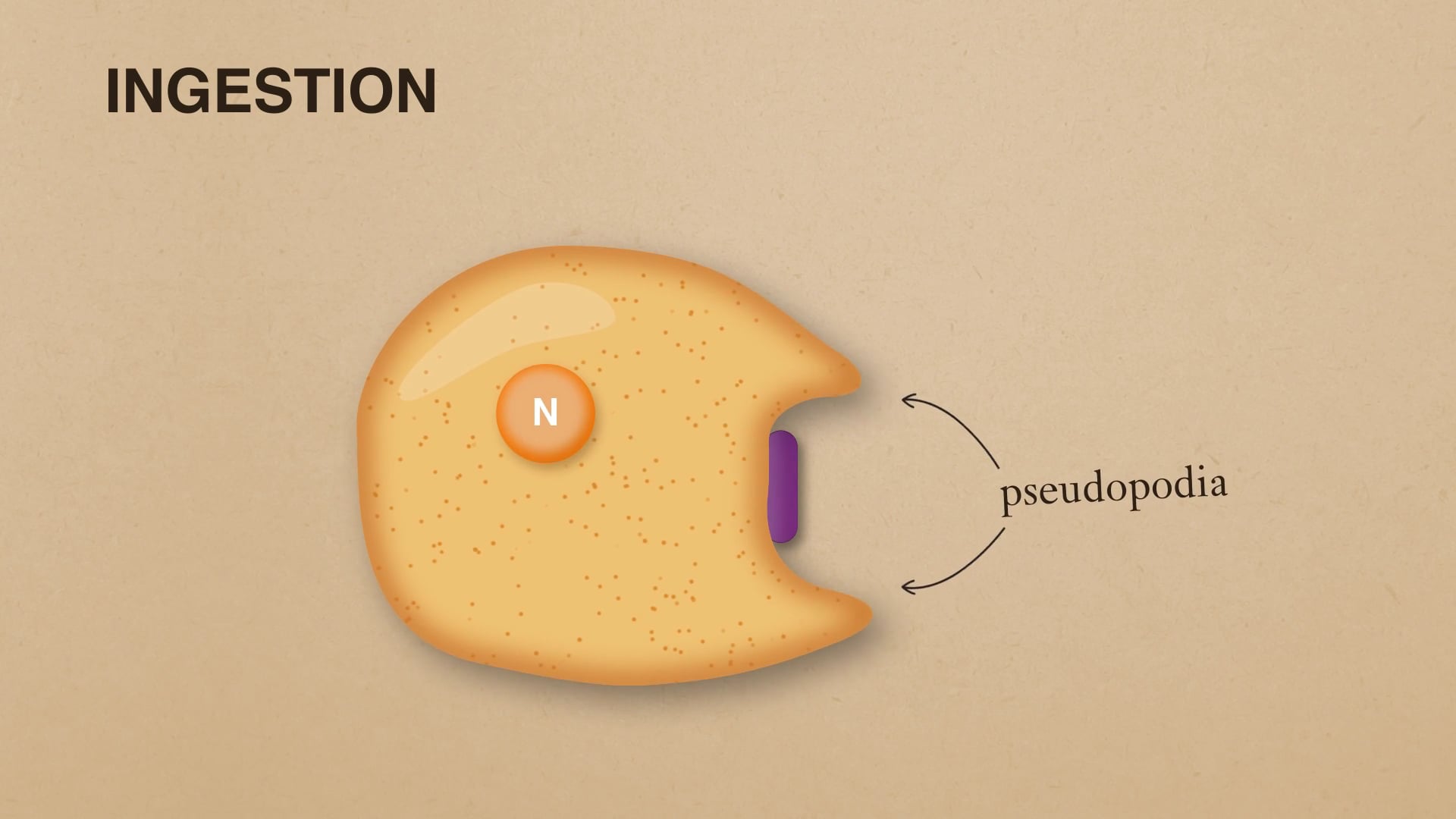
The nine episodes are the bacteriophage lytic process, binary fission, transformation, the Gram staining technique, conjugation, phagocytosis, generalized transduction, selecting for drug-resistant organisms, and inoculating the surface of an agar plate.
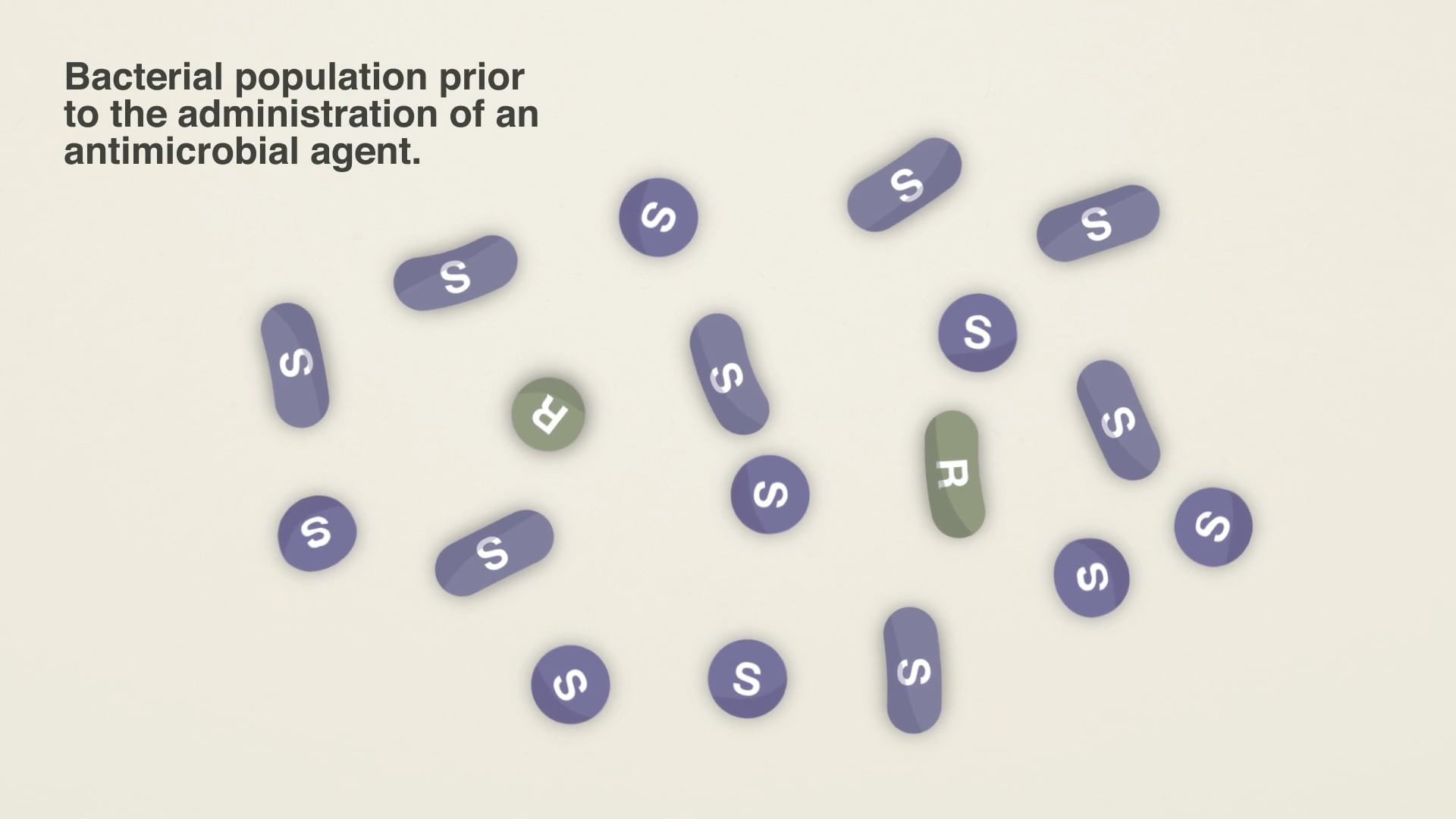
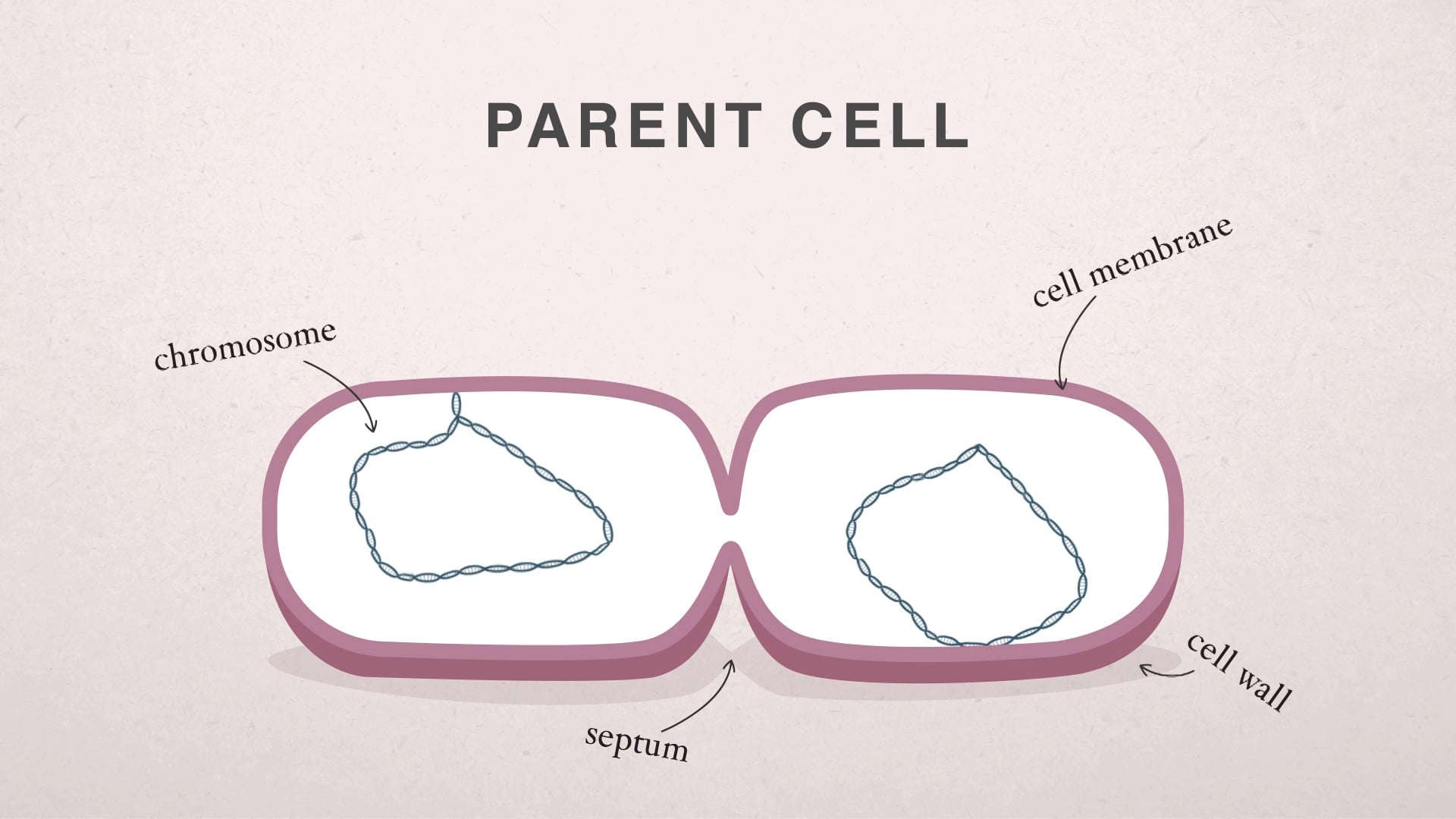
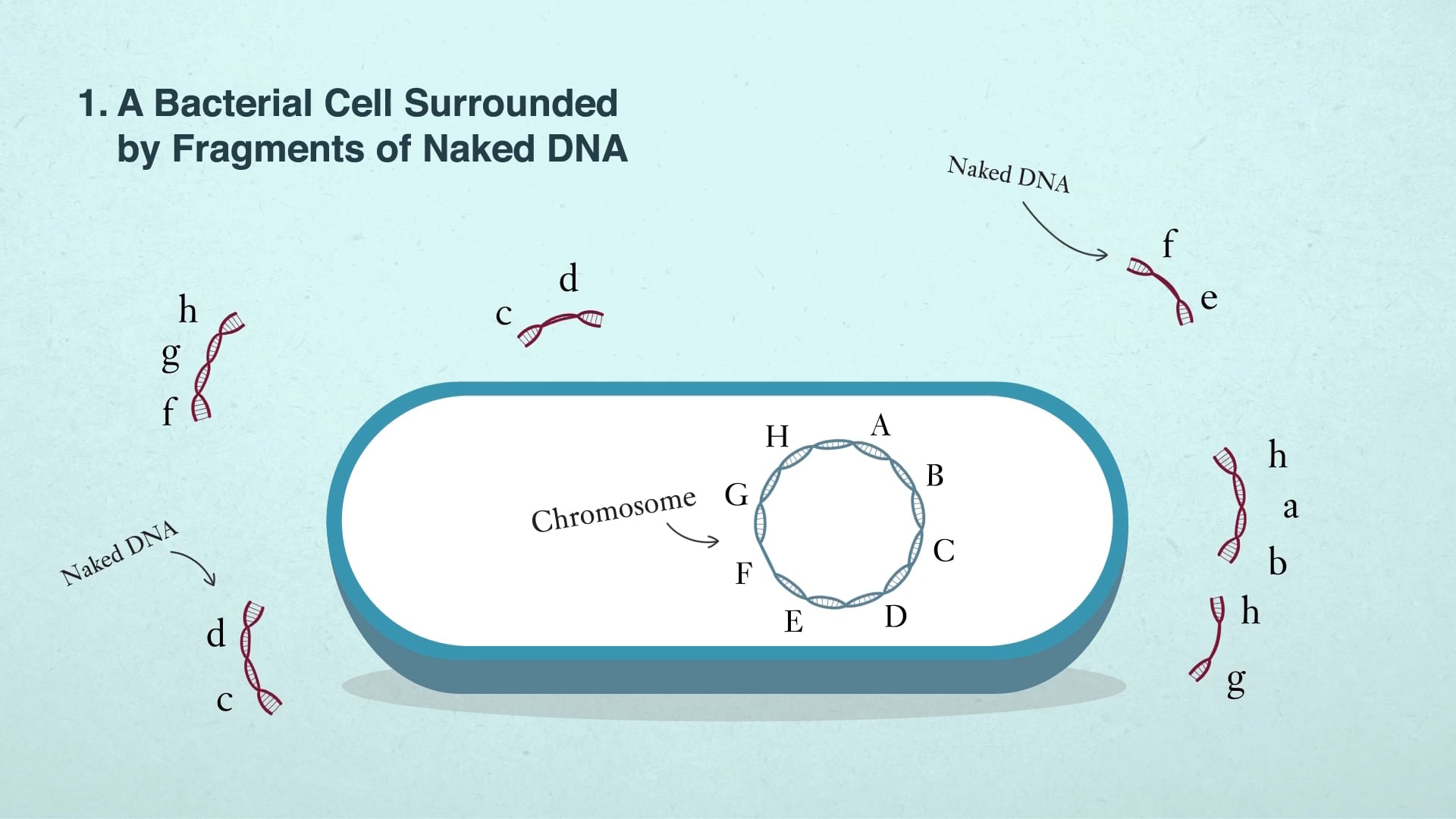
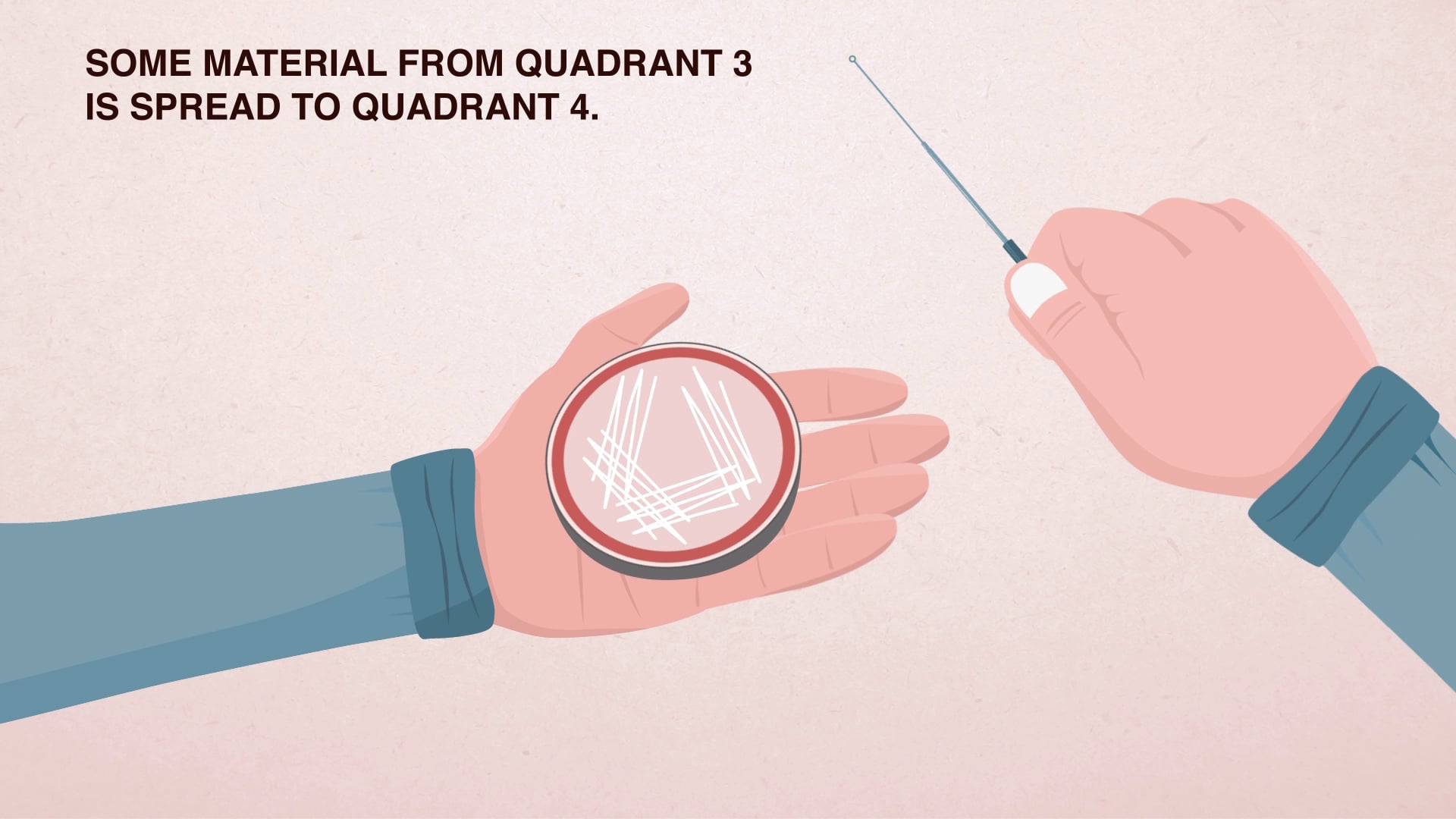
Selecting for Drug Resistant Organisms
One process, every stage named
The method is the same in every episode. We take one process, break it into the stages the literature already names, and give each stage its own visual state on screen. Nothing is skipped and nothing is merged for convenience.
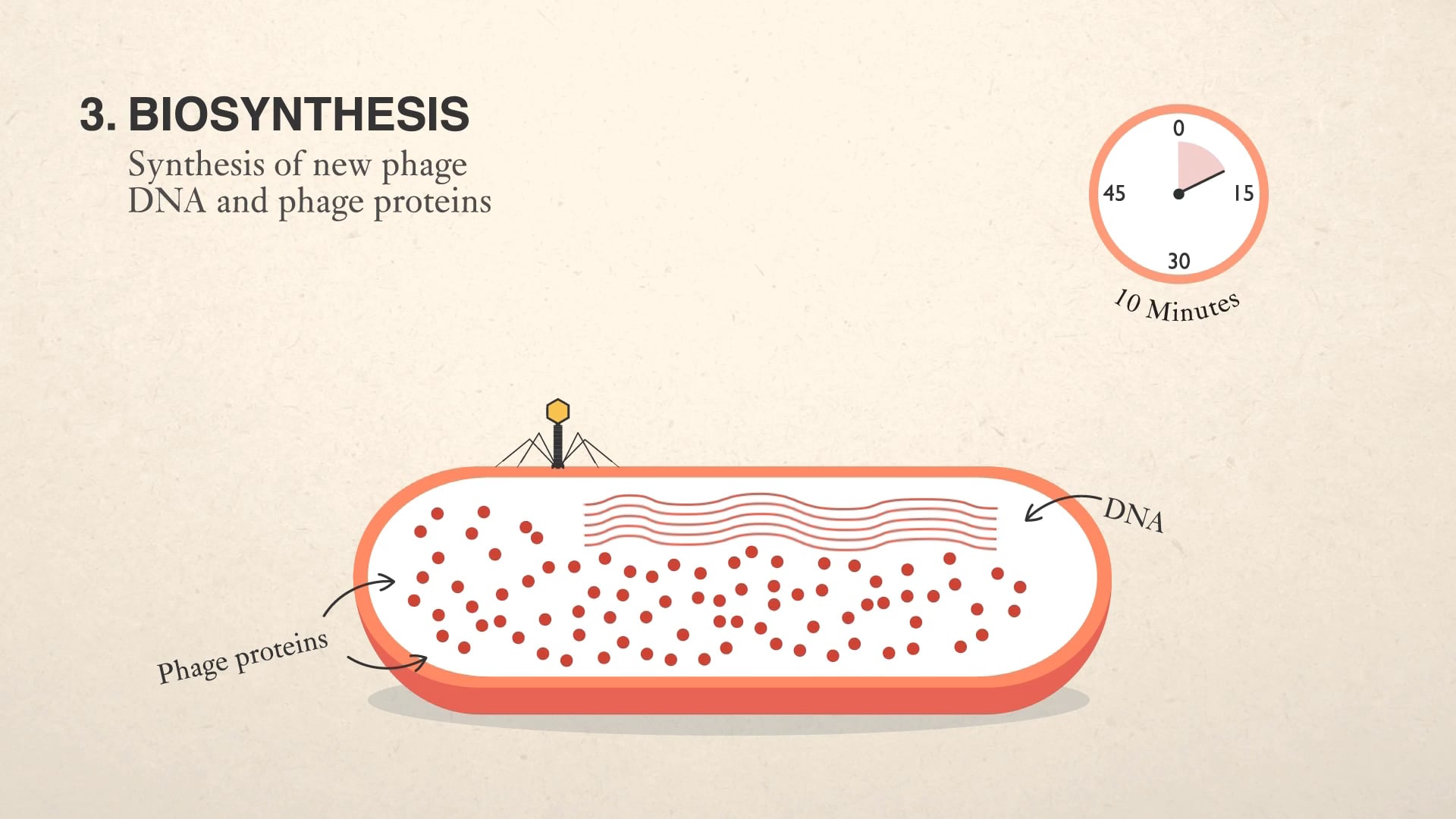
The lytic process is the clearest example. It runs as five labeled stages, each held long enough to be read, with an on-screen clock marking elapsed time so the viewer can see the pace of the cycle as well as its order.
That staging discipline is the whole of our mechanism of action animation method, and it does not change with the subject.
- Attachment of phage to a cell-surface receptor on the bacterial cell wall
- Penetration of phage DNA into the cytoplasm
- Biosynthesis, in which phage DNA directs production of more phage DNA and proteins
- Assembly of those components into complete phage particles
- Release, when the bacterial cell wall lyses and new phages exit
Built to a reference publisher's standard
The series is diagram-led rather than character-led. There is no narrator figure and no metaphor standing in for the biology. The frame holds the cell, the structures are labeled with the terms the audience already uses, and the camera moves only when it needs to show something at a different scale.
The Gram staining episode shows the discipline this demands. It is a lab protocol, so it is staged as one: methanol fixation, crystal violet, an iodine mordant, decolorization with 95% ethanol, and a safranin counterstain, each with the timing and the expected color change at that step.
- Terminology matched to the published reference material
- Labels tied to a distinct visual state, not to a moving target
- Timing and expected results shown where the protocol specifies them
- Reviewed against the source content before animation began
Have a mechanism to explain?
Pipelines of processes, single mechanisms, congress and training content. Tell us what you need to show and we'll come back with ideas.
Nine processes, one visual system
The nine processes look nothing alike. A phage replicating inside a cell, a plasmid crossing between two bacteria through a pilus, a stain developing on a slide, a population shifting under antimicrobial pressure. They share no shapes and no natural scale.
For a buyer with a pipeline of mechanisms to explain rather than a single one, this is the part that matters. The system is what makes the tenth episode cheaper and more consistent than the first. The same approach carries through our healthcare animation work.
The series was produced in 2018. Scientific animation for a reference publisher is a credential that does not expire, and it shows how long this method has been part of our work.
- One illustration system across nine unrelated processes
- Consistent labeling and typography between episodes
- Shared conventions for magnification and cutaway views
- Episodes that stand alone or read as a set
Where mechanism of action animation works best
This series is microbiology, not pharmacological mechanism of action. We have not produced drug MOA work for a pharma client, and the distinction is worth stating plainly rather than blurring.
What transfers is the method. Breaking a biological process into precisely named, correctly sequenced stages that survive scientific review is the same discipline whether the subject is a phage replicating or a compound binding a receptor. That is what a pharma or medtech buyer is evaluating when they look at a studio's scientific work.
It applies most directly to pharmaceutical mechanism of action animation, clinical trial design explainers, medical congress and symposium content, and medical device and procedure walkthroughs, part of our Medical Animation work, produced as 3D animation. For teaching material aimed at clinicians, see our Medical Training & Education Videos.
- Pharmaceutical mechanism of action animation
- Clinical trial design and protocol explainers
- Medical congress and symposium content
- Medical device and procedure walkthroughs
- Scientific and technical reference material
Related case studies
:quality(75)) Training / Compliance
Training / ComplianceA large-scale compliance training series built for consistent rollout across a distributed organization. Full animation was used to simplify complex policies and keep the experience consistent across modules.
 Educational
PBS-WHYY: Educational series
PBS/WHYYAn Emmy-winning civic education series for public media, built as episodes that stand alone while sharing one visual system.
 Healthcare
Healthcare video production company
MotifmotionPatient education, professional training, and scientific communication for hospitals, pharma, and medical education teams.
:quality(75))
Ready to get started?
Scientific animation works when the sequence is right and every stage survives review. Motifmotion can help. Contact us in a few different ways:
We'll work with you to understand your objectives, how we can provide assistance and we'll outline the next steps.